There is a tension every coach knows. You want to be truly there for the other person — fully present, engaged, moved by what is happening. And at the same time, you don’t want to be swept away. You want to keep your head clear, to see what the coachee cannot yet see themselves.
I have given that tension a name: taking it seriously & holding it lightly.
Easier said than done. What does it actually mean — to take something seriously and hold it lightly at the same time?
Taking it seriously
Taking it seriously does not mean working hard, analysing deeply or saying a lot. It means being fully present. You let in what the other person brings. You hear not just the words, but what lies beneath them — the hesitation, the energy, the tension that goes unspoken.
For leaders who coach, this applies just as much. Taking it seriously is not the same as offering a solution. It is the willingness to pause and look at what is really going on — even when that is uncomfortable, even when it takes time.
A coach who does not take it seriously skims the surface. The session feels pleasant enough, but nothing changes. The coachee leaves feeling good but without grounded new insight.
Holding it lightly
And then the other half of the paradox. Holding it lightly is not detachment. It is not professional coolness or lack of involvement.
Holding it lightly means: you are moved, but you are not swept away. You can take the coachee’s or employee’s situation seriously without making it your problem. You keep seeing — even when things get difficult.
This is precisely the space in which growth happens. Not in the coach who fights alongside the coachee, but in the coach who can stay beside the coachee — even when the coachee has temporarily lost their way.
‘Taking it seriously & holding it lightly’ is not a technique. It is an attitude — and one I keep practising.
Why this is so difficult
Because it runs counter to two persistent reflexes.
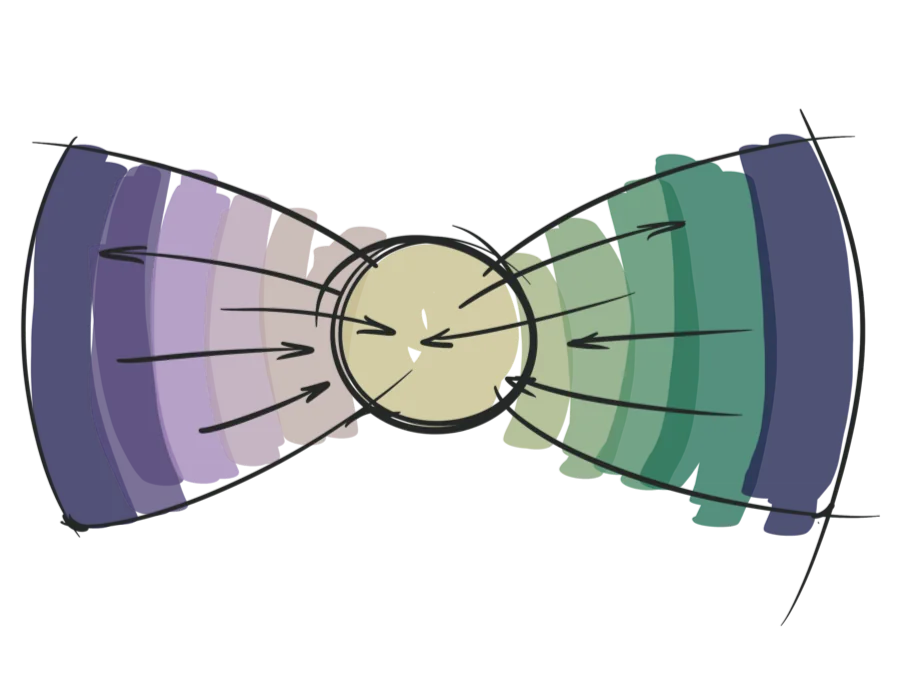
The first reflex is over-identification: you become so absorbed in the coachee’s story that you lose your own perspective. You feel the urgency, the frustration, the sadness — and you react to it rather than reflect on it. You are no longer the coach; you have become a fellow combatant.
The second reflex is protective distance: you maintain such careful detachment that you lose the connection. You ask neat questions, you follow the process, but the coachee senses you are not really there. Depth is avoided.
Both reflexes are understandable. Both make you less effective as a coach.
What this has to do with supervision
This is precisely the kind of pattern you can only see when you look at it with some distance. Not in the midst of a coaching session itself, but afterwards — in reflection, with colleagues who understand what is at stake.
In LCS, this is exactly what we work on. Not by discussing theory about ‘being present’, but by looking at what actually happens in your conversations. When do you lose your lightness? When do you not take things seriously enough? And what do you need to find that balance — and keep it?
Because taking it seriously & holding it lightly is a daily practice. And it gets easier when you don’t have to do it alone.
— Maaike Strack van Schijndel
Curious about Leadership & Coaching Supervision (LCS)?